Free shipping in the contiguous US (lower 48). Get 10% off your first order when you sign up by email or text.Free shipping (lower 48) · 10% off your first order

Botanical heritage · Blue Agave

Blue Agave: The Ancient Plant of the Americas

Rooted in Mexico. Naturally sweet.

For centuries, agave has been part of Mexico’s rich botanical and agricultural heritage.

Long before modern sweeteners, Indigenous communities cultivated and prepared agave plants for food, beverages and everyday life.

At Golden Tiger, we honor this remarkable heritage by choosing organic blue agave as part of our thoughtfully selected botanical ingredients.

Derived from the blue agave plant, our organic blue agave brings a smooth, naturally derived sweetness that complements the vibrant flavors of turmeric and ginger.

Our approach celebrates the origins of our ingredients, the traditions behind them, and the importance of knowing what goes into every can.

Golden Tiger: Rooted in Nature. Inspired by History.
From the agave plant to the sweetener

  1. 1
    The plant

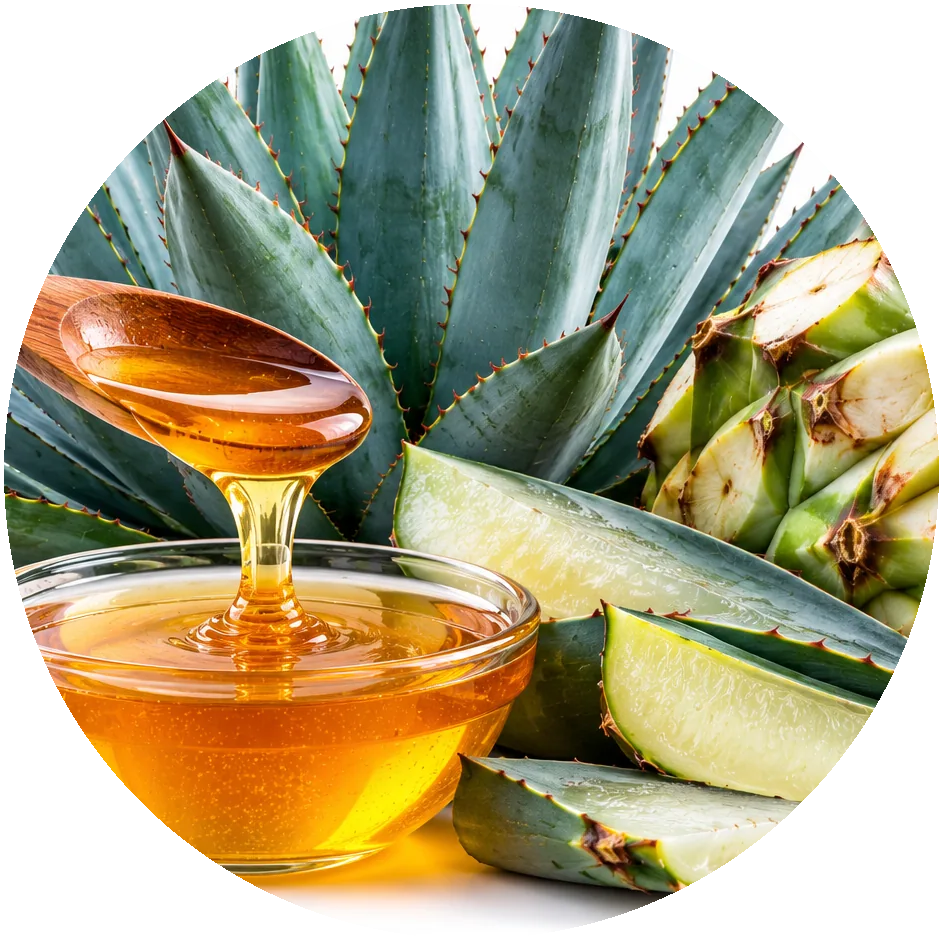
    Blue agave is a succulent native to western and central Mexico, recognized by its striking blue-gray leaves.

  2. 2
    The harvest

    Skilled harvesters, known as jimadores, remove the leaves to reveal the carbohydrate-rich heart of the plant, called the piña.

  3. 3
    The sweetener

    Today, the plant’s natural carbohydrates are broken down into simpler sugars, then filtered and concentrated into a smooth syrup.

Tradition and today, side by side. For thousands of years, communities slow-roasted agave hearts in earth ovens and collected sweet sap, called aguamiel, from several agave species. Modern blue agave syrup is a different, newer ingredient, but it belongs to that same long botanical story. It is a sweetener: each can of Golden Tiger has 4 g of sugar.

Agave through time

  1. Prehistoric eraMexico and the American Southwest

    Agave and the first communities

    Archaeological evidence documents long Indigenous use of many agave species for food, fiber and other materials.

    Verified archaeology
  2. 200–1500 CEWestern Mexico

    Cultivation and cultural significance

    Archaeological finds in Colima include roasting pits and ceramic depictions of agave, pointing to important culinary and cultural roles.

    Verified archaeology
  3. Pre-Hispanic centuriesCentral Mexico

    The tradition of aguamiel

    Communities collected sweet agave sap and fermented it into pulque, usually from agave species other than blue agave.

    Historical text
  4. 16th centuryNew Spain

    Agave in colonial records

    Early colonial accounts describe Indigenous agave cultivation, foods and fibers. They are best read alongside Indigenous perspectives.

    Historical text
  5. 1902Mexico and Europe

    Blue agave is formally named

    Botanists formally describe the blue agave species, giving it its modern scientific identity.

    Botanical record
  6. 20th–21st centuriesMexico and worldwide

    Blue agave as a sweetener

    Producers turn agave carbohydrates into a smooth syrup used in foods and beverages.

    Scientific record

Research and references

  1. Royal Botanic Gardens, Kew. Blue agave. kew.org
  2. Lessons from the history of Agave. Annals of Botany 132(4):819 (2023). academic.oup.com
  3. Instituto Nacional de Antropología e Historia (INAH). Pre-Columbian agave in Colima. Arqueología. revistas.inah.gob.mx
  4. Arqueología Mexicana. El pulque. arqueologiamexicana.mx

Historical uses are described as history, not as evidence that any food or drink treats a condition. We publish an entry only when we can say what its evidence actually shows, and we mark entries that are still being verified.