Free shipping in the contiguous US (lower 48). Get 10% off your first order when you sign up by email or text.Free shipping (lower 48) · 10% off your first order

Botanical heritage · Turmeric

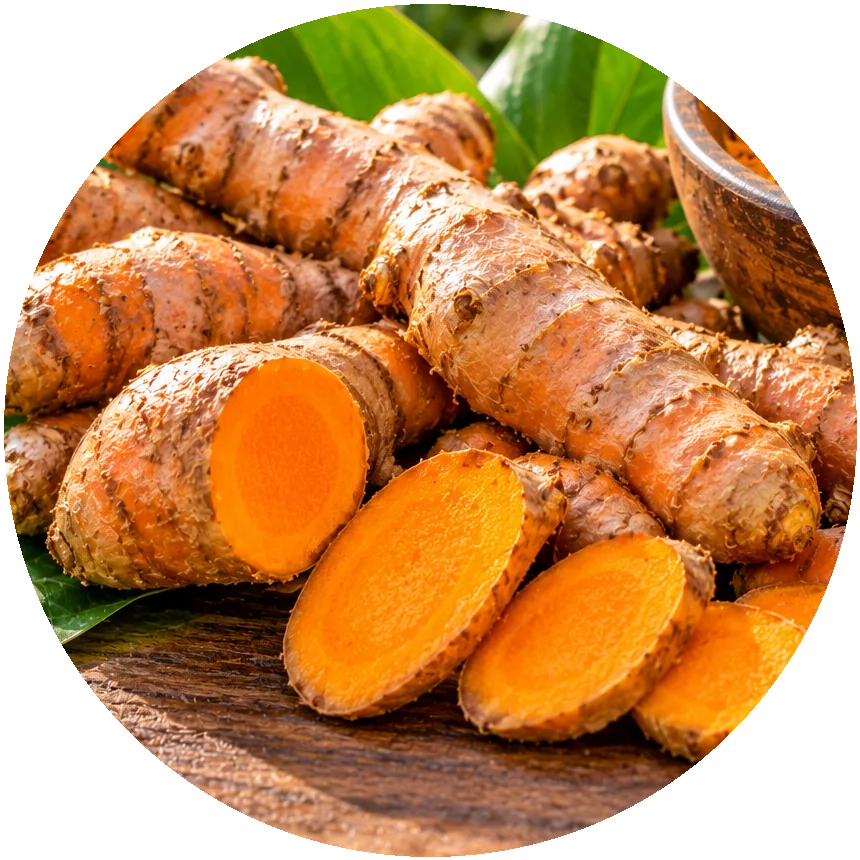
Turmeric: The Golden Root Across Civilizations

A botanical journey through thousands of years.

Long before turmeric became familiar in modern kitchens and scientific laboratories, its golden rhizome was part of the cultural, culinary and traditional healing practices of Asia.

Known as Haridrā in Sanskrit and Jianghuang in Chinese botanical traditions, turmeric traveled through societies that valued plants for their color, aroma, flavor and traditional medicinal applications.

Archaeological discoveries show that turmeric and related spices were processed long ago. In southern Vietnam, researchers identified turmeric residues on ancient grinding stones, direct evidence of its place in early food preparation and cultural exchange.

Across the centuries, Indian medical traditions, Asian botanical scholarship, Islamic pharmacology and European herbal literature all contributed to turmeric’s wider history. In the nineteenth century, scientists began investigating the compounds behind its distinctive color, including curcumin. Research continues today into the properties, limitations and safety of turmeric and its constituents.

At Golden Tiger, we celebrate this remarkable botanical history, honoring the traditions that came before us while respecting the difference between historical knowledge and modern scientific evidence.

Rooted in Nature. Inspired by History.

Informational only: this page describes historical and traditional uses, not the benefits of Golden Tiger.
Turmeric through time

Each entry says what its evidence actually shows. Archaeological evidence of cooking, for example, is not presented as evidence of medical use.

  1. c. 800 BCE – early centuries CEIndia

    Haridrā in Sanskrit medical traditions

    Turmeric appears in Indian medical traditions, in preparations for internal and external use. The exact dating of individual texts is still being established.

    Historical text
  2. c. 200–500 CEÓc Eo, southern Vietnam

    Turmeric on ancient grinding stones

    Starch residues matching Curcuma longa, found on stone food-processing tools alongside ginger, galangal, clove and cinnamon, show turmeric being ground for food about 2,000 years ago. The finds do not show medical use.

    Verified archaeology
  3. First millennium CEChina

    Jianghuang in Chinese materia medica

    Turmeric and related plants appear in Chinese medical writing. We are verifying the earliest surviving passages and which Curcuma species they describe.

    Under review
  4. c. 1200–1248 CEMediterranean Islamic world

    Kurkum in Arabic pharmacology

    The pharmacological tradition of Ibn al-Bayṭār describes turmeric, also called “Indian saffron,” including external preparations. The original Arabic wording is under review.

    Historical text
  5. c. 1330–1340Italy

    Curcuma in a European herbal

    An illustrated herbal, De herbis (Bibliothèque nationale de France, Latin 6823), depicts curcuma, showing that European scholars recognized the plant.

    Historical text
  6. 1815Europe

    Curcumin is isolated

    Chemists first isolated the yellow compound in turmeric and named it curcumin, beginning the scientific study of turmeric’s constituents.

    Scientific record
  7. 21st centuryWorldwide

    Modern research

    Laboratory and clinical research continues to explore curcumin’s properties, its limited absorption and its safety, including the solubility research behind Golden Tiger.

    Scientific record

Research and references

  1. Wang W. et al. (2023). Earliest curry in Southeast Asia and the global spice trade 2,000 years ago. Science Advances. DOI 10.1126/sciadv.adh5517
  2. De herbis, c. 1330–1340. Bibliothèque nationale de France, MS Latin 6823.
  3. Sanskrit, Chinese and Arabic textual entries: passages and dating under verification before detailed publication.

Historical uses are described as history, not as evidence that any food or drink treats a condition. We publish an entry only when we can say what its evidence actually shows, and we mark entries that are still being verified.