Free shipping in the contiguous US (lower 48). Get 10% off your first order when you sign up by email or text.Free shipping (lower 48) · 10% off your first order

Botanical heritage · Ginger

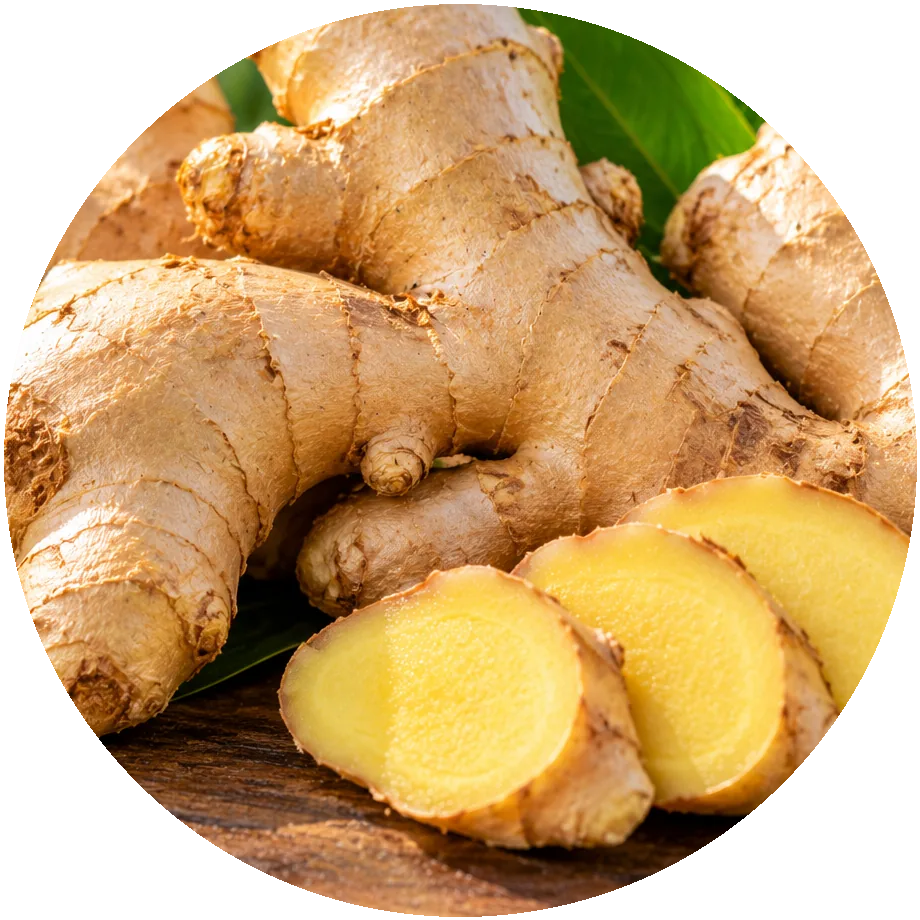
Ginger: The Root That Traveled the World

From ancient Asian botanical traditions to the spice routes of Europe and beyond.

Long before ginger became a familiar ingredient in kitchens around the world, its aromatic rhizome was treasured across Asia for its distinctive warmth, flavor and place in traditional medicine.

Known as Śuṇṭhī in Sanskrit when dried, Ārdraka when fresh, and Shēng Jiāng in Chinese tradition, ginger developed a remarkable history across cultures. From the medical traditions of India and China to the botanical writings of ancient Greece and Rome, it became one of the world’s most widely traveled spices.

Merchants carried it along networks connecting South Asia, the Indian Ocean, the Middle East, the Mediterranean and eventually northern Europe. Over time it found a place in European monastic medicine, medieval apothecaries, and traditional foods and drinks across Africa, Southeast Asia and the Caribbean.

Modern science has since identified gingerols, shogaols and other naturally occurring compounds behind ginger’s characteristic warmth and aroma.

At Golden Tiger, we celebrate ginger’s extraordinary journey: a root whose story connects civilizations, cultures and centuries of botanical exploration.

Rooted in Nature. Inspired by History.

Informational only: this page describes historical and traditional uses, not the benefits of Golden Tiger.
How cultures prepared ginger

India

Traditional terminology distinguishes fresh ginger, ārdraka, from dried ginger, śuṇṭhī. Preparations included dried powder, water-based decoctions, fresh juice and combinations with other botanicals.

China

Chinese tradition distinguishes shēng jiāng (fresh ginger) from gān jiāng (dried ginger), and does not treat them as interchangeable. Fresh ginger commonly appears in decoctions.

Greece and Rome

In the first century CE, the physician Dioscorides described zingiberis in De materia medica, and Pliny the Elder recorded ginger as an imported substance, linking Asian trade to Mediterranean writing.

Arabic and Persian tradition

As zanjabīl, ginger appears in Arabic medical and literary works, often in compound preparations described within medieval medical theory.

A discovery from 1495

Ginger aboard a king’s flagship

Archaeologists studying the Gribshunden, flagship of King Hans of Denmark and Norway, which sank off the Swedish coast in 1495, identified ginger among its preserved provisions, alongside pepper, cloves and saffron. It is direct physical evidence that ginger reached Scandinavian royal circles.

From the ancient spice routes of Asia to the royal ships of medieval Scandinavia, ginger crossed continents and cultures long before modern science began exploring its chemistry.

Ginger through time

  1. Before 500 BCETropical Asia

    Origins and early cultivation

    Ginger was domesticated in tropical Asia, though exactly where and when remains uncertain. It became an important cultivated spice in South and Southeast Asia.

    Under review
  2. Late 1st millennium BCE – early CEIndia

    Ginger in Sanskrit medical traditions

    Fresh ārdraka and dried śuṇṭhī appear in Indian medical traditions, discussed in connection with appetite and digestion. Passages are being matched to dated texts.

    Historical text
  3. 1st century CEMediterranean

    Greek and Roman writers

    Dioscorides discusses zingiberis and Pliny records ginger as an import. Scholars debate whether the Dioscorides entry was part of the original text or added in later copies.

    Historical text
  4. Early centuries CEChina

    Ginger in classical materia medica

    Chinese medical tradition distinguishes fresh from dried ginger, with different preparations. The earliest surviving witnesses are being verified.

    Under review
  5. 7th–10th centuriesIndian Ocean and Islamic world

    A prized trade botanical

    Ginger circulates through maritime and overland trade and appears in Arabic-language medical and commercial writing.

    Historical text
  6. 11th–13th centuriesMedieval Europe

    Ginger in Latin pharmacy

    Latin medical works and pharmaceutical recipes include zingiber. A text mentioning ginger does not by itself show use at a particular place.

    Historical text
  7. 1495Scandinavia

    The Gribshunden shipwreck

    Ginger is identified among the provisions of a Danish royal flagship, confirming its presence in late-medieval Scandinavian royal settings.

    Verified archaeology
  8. 19th–20th centuriesWorldwide

    The chemistry of ginger

    Researchers isolate and characterize ginger’s pungent compounds, eventually identifying gingerols and shogaols.

    Scientific record
  9. 2000–todayWorldwide

    Modern research

    Clinical studies examine ginger preparations for a range of outcomes, with results that depend on the preparation, the amount and the quality of the study. These findings concern ginger research, not Golden Tiger.

    Scientific record

Research and references

  1. Larsson M., Foley B. (2023). The king’s spice cabinet: plant remains from Gribshunden, a 15th-century royal shipwreck in the Baltic Sea. PLOS ONE. DOI 10.1371/journal.pone.0281010
  2. Touwaide A., Appetiti E. (2023). Herbs in History: Ginger. American Herbal Products Association. ahpa.org
  3. Bode A.M., Dong Z. The Amazing and Mighty Ginger. In: Herbal Medicine: Biomolecular and Clinical Aspects, 2nd ed. CRC Press; 2011. NCBI Bookshelf NBK92775
  4. National Center for Complementary and Integrative Health. Ginger: usefulness and safety. nccih.nih.gov

Historical uses are described as history, not as evidence that any food or drink treats a condition. We publish an entry only when we can say what its evidence actually shows, and we mark entries that are still being verified.